
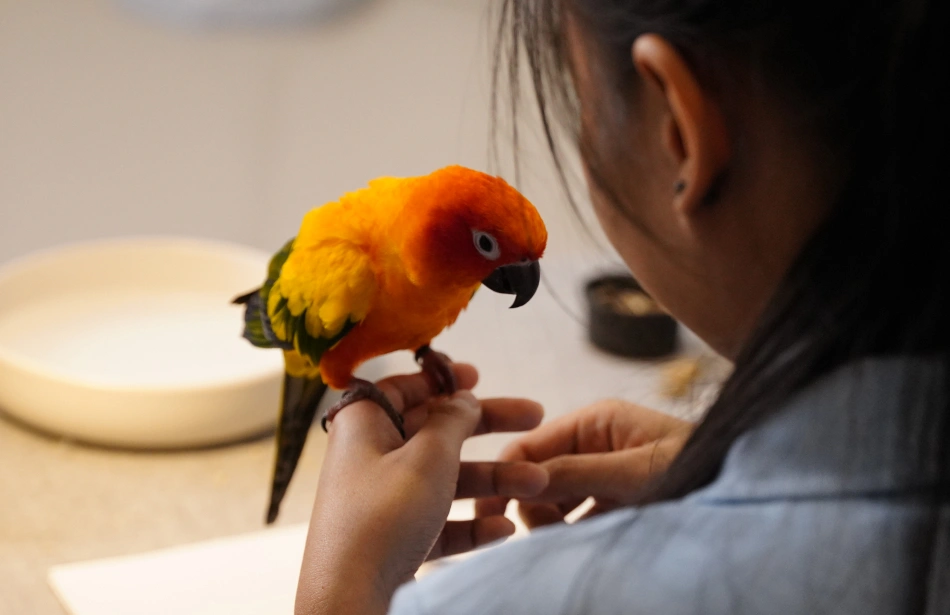
Basics of Bird Health and Care
Pet birds have unique needs for diet, housing, light, and social time. They are very different from cats and dogs. At Green Family Veterinary Practice, Dr. Mary Grabowski has experience caring for many bird species and guiding owners on daily care. With the right support, birds can live long, healthy lives.
The Most Low Maintenance Birds for Beginners
“Low maintenance” still means daily care. These species are often easier for first-time owners:
- Budgies (Parakeets): Small, friendly, and trainable. They do well in pairs if you have limited time for daily interaction. Need a roomy cage, a pellet-based diet, and daily play.
- Cockatiels: Gentle nature, mild voices compared to larger parrots. Enjoy head scratches and simple training. Require a larger enclosure, out-of-cage time, and a varied diet.
- Canaries: Known for song. Usually kept singly. Less hands-on handling, but need a clean, quiet space, a quality seed and pellet mix, and greens.
- Finches (Zebra or Society): Social and active. Best in pairs or small groups. Prefer observing rather than handling. Need a wide flight cage and consistent, simple care.
Even “easy” birds need daily feeding, cleaning, and enrichment. Plan for vet checkups, nail care, and safe household air. Avoid nonstick fumes, aerosol sprays, and scented candles.
Common Bird Health Concerns
- Respiratory issues: Tail bobbing, open-mouth breathing, clicking or wheezing, nasal discharge.
- Nutritional problems: All-seed diets lead to vitamin and mineral deficits, liver disease, and poor feather quality.
- Feather and skin problems: Overpreening, bald spots, mites, or skin irritation.
- Beak and nail overgrowth: May signal diet or health issues and can affect eating and perching.
- Digestive concerns: Changes in droppings, vomiting, or loss of appetite need prompt care.
Many bird illnesses progress quickly and can be hard to notice at first. Early veterinary care is important.
We’re Here for Your Bird’s Health
Birds are intelligent, social, and sensitive to stress and environmental changes. Good care begins with the right enclosure, clean air, and a balanced diet. Most birds do best with a high-quality pellet base, fresh vegetables, and limited seeds. Fresh water should be available at all times. Safe toys, perches of different sizes, and daily interaction help prevent boredom and behavior problems.
Dr. Mary Grabowski understands the needs of different bird species. We use gentle handling and a calm exam style to reduce stress. Schedule a visit with us if you notice anything concerning with your feathered friends.