
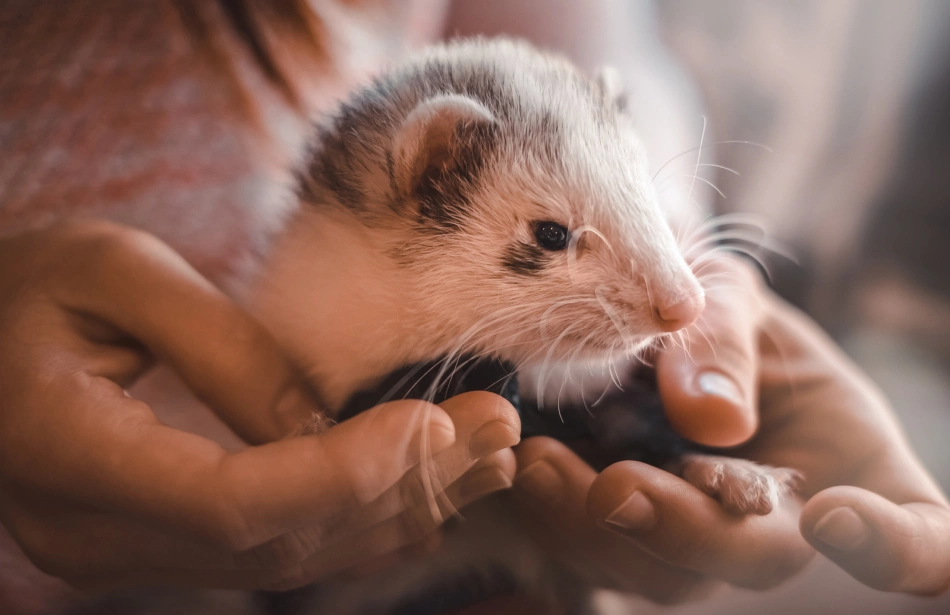
Specialized Care for Ferrets
Ferrets are playful, curious, and very different from cats and dogs. They need the right diet, safe housing, and routine checkups to stay well. Dr. Mary Grabowski has hands-on experience treating ferrets and guiding owners through daily care. With expert support, most ferrets enjoy long, active lives.
What Ferrets Need Day to Day
Ferrets are social, intelligent, and very playful. Most do best with daily interaction and supervised playtime outside the enclosure. They sleep many hours and then have short bursts of high energy.
They are true meat eaters and need a high-protein, low-carb diet. Treats that are sugary or starchy can upset their stomach and affect their health. Fresh water should always be available.
Home setup matters. Use a secure enclosure with solid floors, safe bedding, and multiple levels if possible. Ferrets love to explore, so “ferret-proof” your home to block small gaps, cover cords, and remove chewable foam or rubber. Many ferrets litter train with a shallow box in corners they prefer.
Because ferrets hide illness, preventive care is key. We recommend routine wellness exams, dental checks, parasite screening as needed, and a vaccine plan appropriate for our area. Early care keeps problems small and helps your ferret feel comfortable.
Common Ferret Health Concerns
- Dental disease: Tartar, sore gums, and tooth pain can reduce appetite and cause weight loss.
- Stomach and gut problems: Diarrhea, vomiting, or blockages from chewing foam or rubber toys.
- Low blood sugar problems: May cause drooling, pawing at the mouth, wobbling, or collapse.
- Hormone issues: Hair loss, itchy skin, or behavior changes can signal gland problems.
- Breathing infections: Sneezing, discharge, cough, or noisy breathing need prompt care.
- Parasites and skin trouble: Fleas, ear mites, and rashes are uncomfortable and can spread.
At Green Family Veterinary Practice, our team uses gentle, low-stress handling and exams that fit how ferrets move and react. We teach clear, simple steps for diet, housing, enrichment, and hygiene, so you feel confident at home. With a focus on prevention, fast diagnosis, and kind care, we help your ferret stay healthy at every stage.