
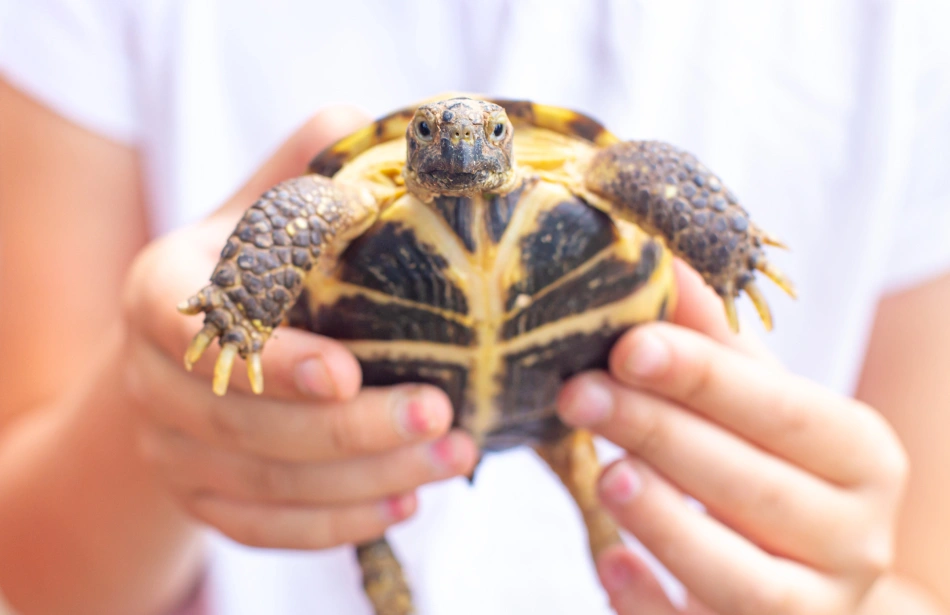
Why Turtle and Tortoise Care is Different
Turtles and tortoises are long-lived reptiles with needs unlike dogs or cats. They rely on steady heat, UVB light, and proper humidity to digest food and build strong shells. Clean water and a balanced diet are just as important. With a proper habitat and regular wellness checks, they can thrive for decades.
Habitat and Diet Basics
- Heat and light: Provide a warm basking spot, a cooler area, and 10 to 12 hours of UVB light daily.
- Humidity: Match the species. Some need humid hides. Others need drier air.
- Water quality: For aquatic turtles, use strong filtration and do regular partial water changes.
- Diet: Tortoises thrive on grass and calcium-rich leafy greens, aquatic turtles need quality pellets, greens, and species-appropriate protein, while box turtles do best with a mix of insects, greens, and some fruit.
- Calcium: Offer a calcium source. Pair with UVB light for proper absorption.
Why Box Turtles are Good for Beginner Turtle Owners
Box turtles can be a good first choice when owners give them proper care.
- Manageable size: Smaller than many aquatic turtles, which helps with space planning.
- Balanced diet: Omnivores that accept insects, greens, and some fruit. Easy to feed well.
- Temperament: Often calm and curious with gentle handling.
- Simple gear list: Secure enclosure, hiding spots, shallow soaking dish, correct heat and UVB. No large aquarium filter needed.
Important Notes for New Owners:
- Choose captive-bred animals from reputable sources.
- Check local laws before purchasing.
- Plan for a long life span. Many box turtles live for several decades.
- Outdoor time in safe weather is helpful. Always provide shade and a secure fence.
Common Health Concerns
- Bone and shell weakness: Low calcium or poor lighting causes soft shell and weak bones.
- Respiratory infection: Open-mouth breathing, wheezing, bubbles from the nose, swollen eyes.
- Shell injuries and shell rot: Cracks, soft spots, foul odor, or discharge on the shell.
- Parasites and skin problems: Itching, flaky skin, or poor shedding.
- Digestive trouble: Refusing food, weight loss, diarrhea, or floating oddly in the water.
Small problems can grow fast if heat, light, or diet are off. Early vet care is best.
Why Choose Us for Your Turtle or Tortoise
Dr. Mary Grabowski provides species-specific care and clear guidance you can use at home. We review your habitat, heat, UVB, humidity, diet, and water quality in simple steps. We use gentle handling and low-stress exams, offer fecal checks, X-rays, shell care, and supportive treatments when needed. Our goal is prevention, early diagnosis, and kind care so your pet thrives for years.