28341 Diehl Rd. Warrenville, IL 60555

Pets communicate love through their eyes, purrs, tail wags, and soft nudges—but they cannot tell us when something feels wrong. Many health conditions develop quietly inside the body, often unnoticed until symptoms become severe. That is where diagnostic imaging plays a crucial role. It allows veterinarians to look beneath the fur, muscles, and organs without surgery, giving pets faster and safer access to proper treatment.
In communities like Warrenville—where families enjoy long walks on scenic trails, lazy weekend mornings with their pets at home, and meaningful companionship—early detection means more years of joy with their beloved animals. Therefore, understanding how imaging works empowers pet parents to act confidently when health concerns appear.
Why Diagnostic Imaging Matters in Veterinary Medicine
Diagnostic imaging is essential for veterinary care because it reveals what cannot be seen through a physical exam alone. While a vet can check heart rate, temperature, and pain response, imaging shows bones, tissues, organs, and internal structures in detail. Issues like fractures, tumors, foreign bodies, and organ diseases become visible, allowing timely interventions.
Moreover, early diagnosis reduces long-term treatment costs, prevents complications, and improves recovery outcomes. When illness is detected early, treatment is faster, less invasive, and more successful.
Common Types of Diagnostic Imaging for Pets
Veterinary hospitals use several imaging tools depending on the condition. Each technique offers unique advantages and helps pinpoint specific problems.
1. X-Rays (Radiographs)
X-rays are one of the most frequently used diagnostic tools. They create images of bones and dense tissues, allowing vets to see fractures, arthritis, dental disease, swallowed objects, and chest abnormalities. Because they are quick, affordable, and accessible, X-rays are often the first step in diagnosis.
2. Ultrasound
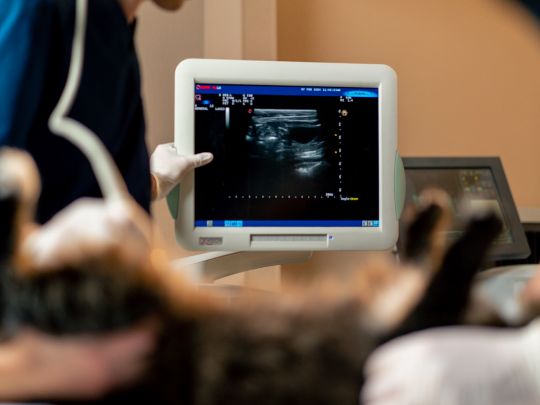
Ultrasound uses sound waves to produce real-time internal images. Unlike X-rays, it shows soft tissues and organ movement, making it ideal for examining the heart, liver, kidneys, bladder, and pregnancy. It also helps detect cysts, tumors, blockages, and internal bleeding.
3. CT Scans (Computed Tomography)
CT scans provide a three-dimensional view of the body. They are especially useful for identifying complex bone injuries, nasal issues, spinal problems, and tumors. CT imaging offers greater clarity than standard X-rays and is commonly used for surgical planning.
4. MRI (Magnetic Resonance Imaging)
MRI focuses on soft tissues, nerves, and brain structures. It is used to diagnose neurological conditions like seizures, spinal disorders, paralysis, or suspected brain tumors. Although more advanced, MRI gives unparalleled detail where accuracy matters most.
Conditions Diagnostic Imaging Can Detect
Imaging reveals hidden conditions that might otherwise remain unnoticed. Some common health issues detected through imaging include:
• Broken or fractured bones
• Arthritis and joint degeneration
• Heart abnormalities
• Bladder or kidney stones
• Tumors and internal masses
• Liver or kidney disease
• Pneumonia or lung problems
• Gastrointestinal blockages
• Dental disease and root infections
When a pet stops eating, acts lethargic, limps, vomits, or displays unusual behavior, imaging shines light on the cause.
How Diagnostic Imaging Works Step-by-Step
Understanding the process reduces stress for both pets and owners. Here’s what typically happens during imaging:
- Initial Examination:
A veterinarian evaluates symptoms and determines which imaging test is needed. - Preparation:
Most pets undergo imaging fully awake, but anxious animals or advanced scans may require mild sedation for stillness and safety. - Imaging Procedure:
The pet is positioned carefully while the medical staff captures internal images. - Reviewing the Results:
The veterinarian interprets images, discusses findings with the owner, and recommends treatment or further diagnostics. - Treatment Planning:
Depending on results, treatment may include medication, surgery, dietary changes, or ongoing monitoring.
Because imaging is painless and non-invasive, pets remain comfortable throughout the process.
Benefits of Diagnostic Imaging for Pets
Diagnostic imaging offers multiple advantages beyond early detection:
• Non-invasive and safe: No surgical cuts required.
• Fast and accurate results: Many scans offer immediate insights.
• Better treatment planning: Helps veterinarians target the exact problem.
• Reduces guesswork: Owners get clear answers about their pet’s health.
• Improves long-term outcomes: Early detection leads to better recovery.
Even subtle symptoms—slowed movement, mood changes, limping—can signal deeper issues that imaging helps uncover.
When Should You Consider Diagnostic Imaging?
Pet owners often wonder when imaging becomes necessary. You should request or expect imaging when:
• Your pet experiences trauma or injury
• Breathing becomes difficult or noisy
• Sudden limping or pain appears
• A lump or swelling is detected
• Vomiting or digestive issues persist
• Your pet stops eating or drinking normally
• Seizures or unusual neurological changes occur
• Dental pain or facial swelling appears
In Warrenville neighborhoods where pets frequently play outdoors, accidental falls, swallowed items, and hidden injuries are more common than many think. Acting early prevents worsening complications.
Diagnostic imaging is one of the most powerful tools in modern veterinary medicine. It uncovers hidden conditions, supports quick treatment decisions, and restores pets to health with clarity and confidence. While symptoms may be subtle, imaging reveals the truth—making it easier for veterinarians to provide the right care at the right time.
For owners seeking reliable pet diagnostic care in Warrenville, IL, Green Family Veterinary Practice is here to help. Your pet’s comfort and health matter, and early diagnostic support can make all the difference in their well-being.
FAQs
Q1. Is diagnostic imaging safe for pets?
Ans. Yes, imaging is safe. Most methods are non-invasive, and sedation is used only when necessary to keep pets calm.
Q2. Does my pet need sedation for X-rays?
Ans. Not always. Some pets stay still naturally, but sedation may be used for anxious animals or complex angles.
Q3. How long do imaging results take?
Ans. Basic results are often available the same day. Advanced scans like MRI or CT may require additional review time.
Q4. Can imaging detect cancer in pets?
Ans. Yes. Imaging helps locate tumors, evaluate size, and assist in treatment planning.
Q5. How often should aging pets undergo imaging?
Ans. Senior pets benefit from yearly exams, with imaging recommended when symptoms arise or conditions change suddenly.
Q6. Is diagnostic imaging expensive?
Ans. Costs vary by test type. However, early diagnosis often prevents costly emergency treatments later.